For HOA Boards & Property Managers

Your community deserves a landscape that actually works in Florida.

Living Spaces Gardening helps HOAs across Tampa Bay replace high-maintenance landscaping with Florida native plants — lower water bills, less upkeep, and community spaces residents are proud of.

The Problem

Most HOA landscapes are fighting Florida instead of working with it.

Non-native grasses and ornamental plants require constant inputs to survive Florida's heat, salt, and seasonal flooding. That cost lands on the community every year — through water bills, contractor invoices, and plant replacements after every storm.

Native Florida plants are built differently. They handle drought, salt, and hurricanes without constant intervention. Once established, they largely take care of themselves.

What we do for HOAs →
  • 💧

    Irrigation Costs

    Florida native plants are adapted to local rainfall. Once established, most require little to no supplemental watering.

    Non-native: High water use Native: Minimal irrigation
  • 🪚

    Maintenance Hours

    Native plants grow at natural rates for this climate — less weekly mowing, trimming, and replanting after storms.

    Non-native: Weekly upkeep Native: Seasonal care
  • 📋

    County Compliance

    Many Tampa Bay municipalities require native plantings in stormwater zones and buffer areas. Non-compliant landscaping creates ongoing risk.

    Non-native: Compliance liability Native: Satisfies requirements

What We Do

Everything your community needs in one team.

Living Spaces Gardening handles the full native landscape scope — design, installation, and ongoing care. Founded 2018. Florida Master Naturalist-led.

01

Native Plant Installation

Design and installation of Florida-native plant communities for common areas, entrance features, buffer zones, and community gardens. Built for this climate from day one.

Common areas & entrances
02

Invasive Species Removal

Identification and removal of Brazilian pepper, air potato, cogon grass, and other invasives that damage native ecosystems and create liability on community property.

Property-wide
03

Stormwater Pond Planting

SWFWMD-compliant native littoral plantings for retention ponds — satisfies permit requirements and reduces algae, erosion, and water quality problems over time.

SWFWMD compliant
04

Hardscape Design

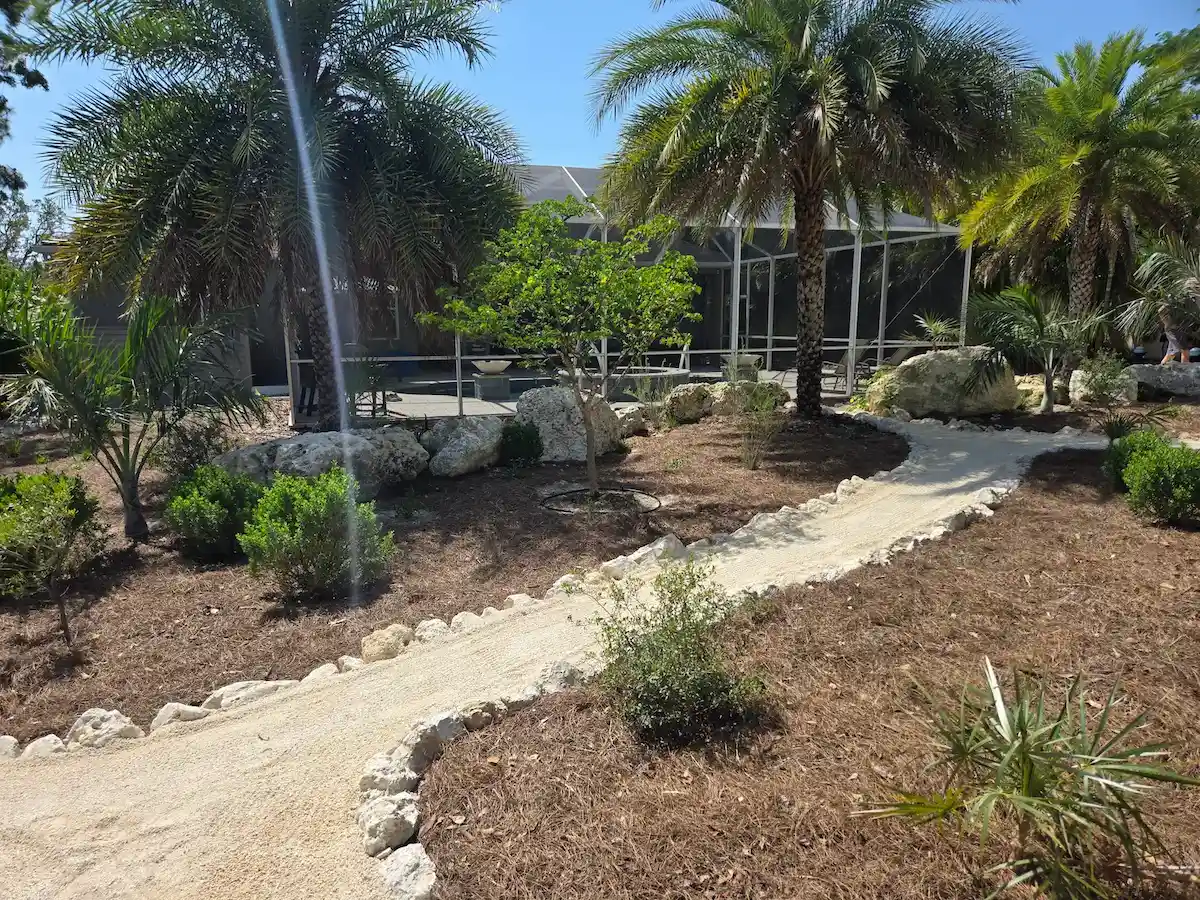
Pathways, dry river beds, and stonework built to work with your landscape — not against it. Functional hardscaping that handles Florida's rain and looks intentional.

Pathways & features
05

Irrigation Design

Florida's dry season runs eight months. We design irrigation that puts water exactly where plants need it so nothing dies waiting for June — and nothing is wasted.

Dry season ready
06

Garden Maintenance & Monitoring

Scheduled care and monitoring through every season. Most landscapes decline after install. Ours get better every year. We stay with your community's investment.

Ongoing stewardship
Why It Matters Now

Rules that affect your HOA today.

Native plant requirements apply now to any landscaping renovation, stormwater work, or common area improvement your community undertakes.

Florida Water-Efficient Landscaping Law

Florida law (Statute 373.185) prohibits HOA deed restrictions from banning Florida-Friendly and native landscaping. Your residents have the right to go native — and so does your board.

Florida Statute 373.185

SWFWMD Stormwater Pond Littoral Requirements

Retention ponds in SWFWMD's jurisdiction must maintain native littoral plantings along a required percentage of the pond shoreline. This is ongoing, not a one-time installation.

SW Florida Water Management District

Sarasota County Native Plant Preservation

Sarasota County requires 30-50% native plant preservation on renovation and development projects. HOA landscape renovations may trigger this requirement.

Sarasota County LDR

Municipal Landscaping Ordinances

Many Tampa Bay municipalities — including St. Petersburg, Largo, and Clearwater — have adopted native plant requirements for buffer zones and common areas in community developments.

Local ordinances vary by city

How It Works

From first call to finished community.

01

Site Visit

Kiamesha walks your property, identifies the highest-impact opportunities, and reads what the land actually needs.

02

Proposal

Clear written proposal with scope, species list, timeline, and pricing your board can present to residents and vote on.

03

Installation

The Living Spaces Gardening team handles all removal, preparation, and planting with minimal disruption to residents.

04

Ongoing Care

Scheduled maintenance and monitoring keeps the community landscape growing stronger through every season.

What Clients Say

Tampa Bay homeowners and communities who went native.

★★★★★

"Kiamesha, Justus and the Team did a fantastic job transforming our backyard. The nine oolite limestone boulders sourced from Miami make an added statement, and the almost 400 feet of pathways lined with limestone rocks makes for a great early morning coffee walk."

Steve Jarae

Backyard transformation

★★★★★

"Our ho-hum suburban lawn has become a haven for butterflies, bees, and an occasional bunny. Pest insects are under control naturally. Kiamesha is available for consultation when we have questions. We are grateful for the expertise and ongoing support."

Wynn

Front yard landscape design

★★★★★

"Kiamesha and Justus created a design I loved that worked well for my space. I love that they only work with Florida natives and took the time to educate me on how all the plants work together. I've never seen so many birds and butterflies on my property!"

Xan

Native garden design

Common Questions

What HOA boards typically ask.

Yes. Living Spaces Gardening handles native plant design, installation, and ecological work while your existing contractor manages routine mowing and irrigation upkeep. Many HOAs use both teams — Living Spaces Gardening for the native and ecological scope, a separate contractor for general maintenance.

Yes. Florida native plants are adapted to local rainfall, soil, and seasonal dry periods. Once established, most require significantly less supplemental irrigation, fewer fertilizer applications, and less ongoing contractor time compared to non-native landscaping. For communities with large common areas, this adds up quickly.

Yes — and often better. Native Florida landscape designs are visually polished, structured, and intentional. Living Spaces Gardening designs community spaces that look designed, not wild. Plants bloom seasonally, attract wildlife, and hold up through Florida's storms in ways that non-native ornamentals simply do not.

Yes. Florida Statute 373.185 prohibits HOA deed restrictions from banning Florida-Friendly landscaping, which includes native plants. This means your residents have a legal right to plant native species — and your board can choose native designs for common areas without restriction.

Contact Living Spaces Gardening at 727-710-7400 or use the form on this page. Kiamesha will schedule a site visit, walk your community, and provide a clear written proposal the board can review and vote on. Consultations start at $125 and that goes toward your design.

Start Here

Let's talk about your community.

Kiamesha will walk your property, identify the highest-impact opportunities, and put together a clear proposal your board can act on. Consultations start at $125 and that goes toward your design.

Responses within one business day.  |  Founded 2018. Based in St. Petersburg, FL.